
Norbornene Technology
Learn more about Promerus, our capabilities, and how we support advanced material development.
What is norbornene?
Norbornene is a highly reactive cyclic olefin that serves as an important building block for advanced polymers, specialty chemicals, electronic materials, and functional materials. Its unique ring structure and ring strain make it particularly useful for polymer synthesis.
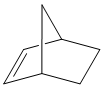
Norbornene Structure
Why is norbornene important?
Norbornene serves as a versatile building block for advanced polymers and is used in cyclic olefin copolymers (COCs), pharmaceutical intermediates, pesticide compounds, specialty fragrances, and organic synthesis.
What are functionalized norbornene monomers?
Functionalized norbornene monomers are norbornene derivatives that contain reactive or non-reactive functional groups. These modifications allow scientists to tailor polymer properties for specific applications.
Why are functionalized norbornenes useful?
Functionalized norbornenes allow specific properties to be designed directly into a polymer, including adhesion, flexibility, dielectric performance, optical clarity, chemical resistance, post-polymerization functionalization, and crosslinking capability.
What types of functional groups can be attached to norbornene?
Examples include carboxylic acids, alkyls, alcohols, esters, ethers, aldehydes, ketones, nitriles, epoxides, acetate groups, silyl ethers, and phenyl groups among others.
How is norbornene polymerized?
Norbornene can be polymerized by several methods, including:
- Ring-Opening Metathesis Polymerization (ROMP)
- Vinyl Addition Polymerization (VA)
- Radical Polymerization
- Cationic Polymerization
What is the difference between ROMP and Vinyl Addition Polymerization of functionalized norbornene?
ROMP produces unsaturated polymers with a single ring in the backbone, while Vinyl Addition Polymerization produces saturated polymers with bicyclic backbone structure. These different polymer structures can lead to significantly different material properties.
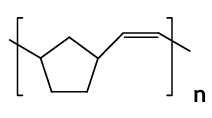
ROMP
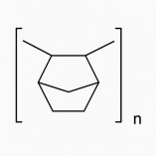
Vinyl Addition
What catalysts are used for norbornene polymerizations?
A variety of transition metals can be used, including molybdenum, tungsten, ruthenium, titanium, zirconium, nickel, and palladium. Promerus highlights nickel and palladium as highly active catalyst systems with good functional group tolerance.
What advantages do Promerus catalysts provide?
Promerus catalysts offer:
- High activity
- Single-component operation
- Low catalyst residue
- Controlled molecular weight
- Broad functional group tolerance
What makes Promerus unique in norbornene technology?
Promerus combines expertise in:
- Functionalized norbornene monomers
- Proprietary catalyst systems
- Polymer design
- Material formulation
- Analytical testing
- Custom product development